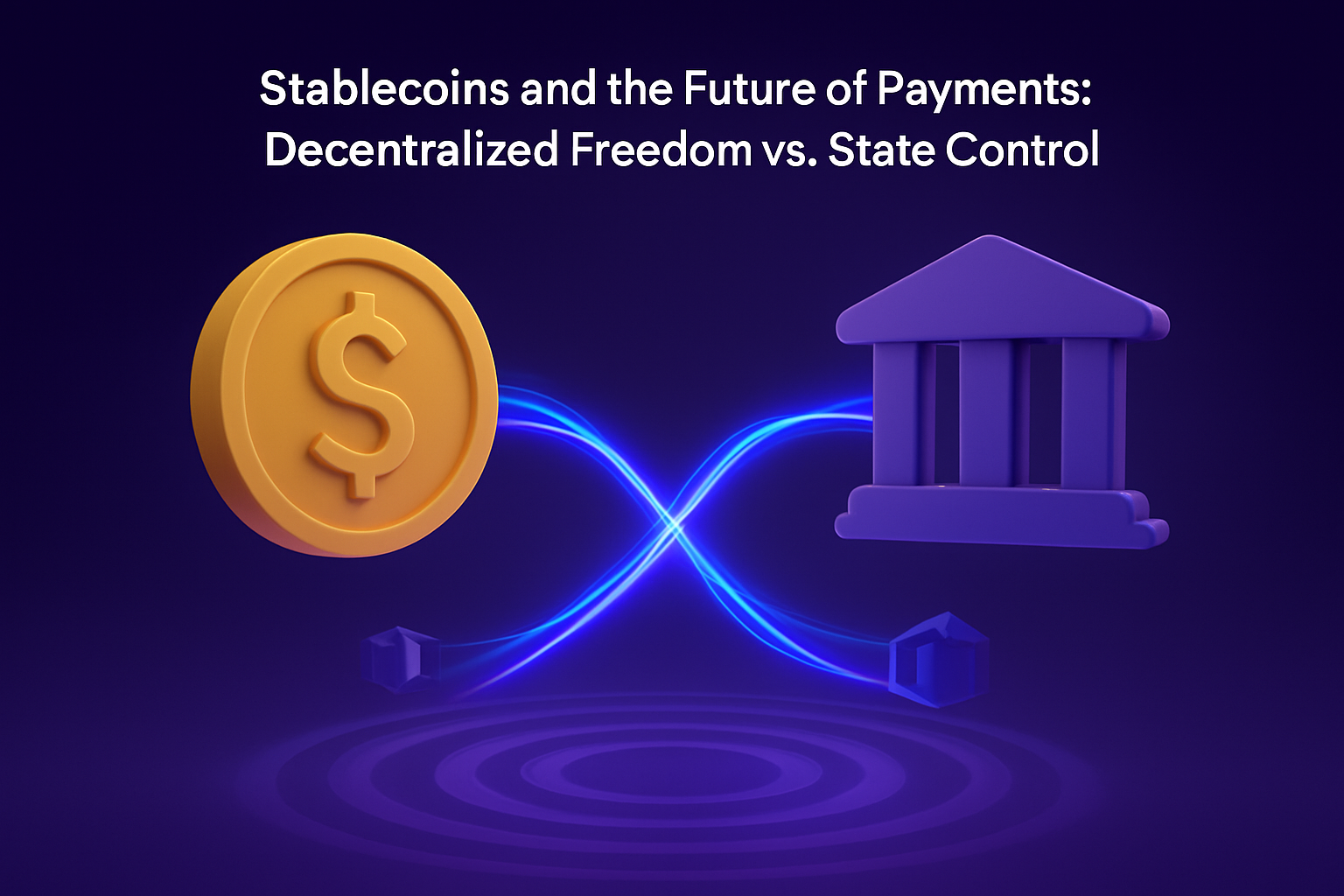
The global monetary system is entering a new era, where digital technology is reshaping its foundations. Three economic models are competing: decentralized freedom, institutional stability, and state control. Bitcoin, central bank digital currencies (CBDCs), and stablecoins embody these contrasting visions. This evolution raises a fundamental question: who will control the money of the future?
Three models, three philosophies: freedom, stability, control
Three approaches stand out in the current monetary revolution:
- Freedom, embodied by Bitcoin, advocates for a system without intermediaries, based on trust in code rather than institutions.
- Stability, represented by central bank digital currencies (CBDCs), relies on state governance and increased oversight.
- Hybrid control, illustrated by stablecoins, seeks to combine blockchain innovation with regulatory frameworks.
Each model reflects a societal choice: prioritizing speed over autonomy, or security at the expense of decentralization.
The future of payments: between code, trust, and power
While information has long been dematerialized, money remains anchored in centralized structures. The emergence of cryptocurrencies and stablecoins is challenging this paradigm.
The next generation of payments is built on open, interoperable, and programmable protocols, where trust shifts from intermediaries to code.
What is a stablecoin?
A stablecoin is a digital asset pegged to a stable value, typically a fiat currency such as the US dollar or the euro. It combines the speed and transparency of blockchain with the stability of a traditional currency.
This hybrid system makes it possible to use crypto technology without being exposed to the volatility of traditional tokens.
The rise of stablecoins alongside central bank digital currencies (CBDCs)
Central bank digital currencies (CBDCs), such as the digital euro or digital yuan, aim to ensure monetary sovereignty and the security of transactions.
However, their development remains slow and is constrained by heavy regulatory processes. Stablecoins, on the other hand, are gaining ground thanks to their flexibility and rapid adoption in digital payments.
Blockchain: speed, interoperability, and innovation
Stablecoins leverage the power of blockchain to enable instant, traceable, and interconnected transactions across countries and platforms.
This technological efficiency is challenging the role of banks and traditional payment systems, which are often seen as costly and rigid.
New competition for banks
By removing intermediaries, stablecoins reduce costs and speed up international money transfers.
They provide an accessible alternative, particularly in regions facing high inflation or limited access to banking services.
This evolution is pushing financial institutions to rethink their business models in the face of decentralized finance.
Toward a hidden form of recentralization?
Born to embody freedom, some stablecoins are paradoxically becoming instruments of control. Issuers can sometimes freeze funds, track transactions, or comply with orders from central authorities. The promise of a system without intermediaries gives way to a hybrid form of governance in which power becomes concentrated once again among a small number of private actors.
A new form of monetary power
Stablecoins are reinventing money, but they reproduce certain aspects of the traditional system: dependence on the US dollar, national regulation, and centralized management.
This compromise creates a tension between technological innovation and the preservation of monetary control.
A matter of monetary sovereignty
Through the mass issuance of dollar-pegged tokens, stablecoins extend American economic influence.
Europe and other monetary powers are seeking to respond with their own digital currencies in order to avoid increasing dependence on private stablecoins.
A global game of strategy
The future of money resembles a global game of chess between the United States, China, Europe, and emerging economies, where each seeks to set its own standards while preserving the interoperability required for global stability, an outcome that will define the balance between cooperation and financial dominance.
Toward a coexistence of different models
It is likely that no single system will prevail on its own. Public digital currencies, private stablecoins, and decentralized cryptocurrencies will coexist, each serving specific needs such as stability, speed, or independence.
Is Bitcoin the true long-term stablecoin?
In the long term, some see Bitcoin as the purest form of stability: limited supply, neutrality, and resistance to censorship. In contrast, stablecoins remain dependent on traditional currencies and their economic fluctuations. The debate over the true “money of the future” is only just beginning.
Conclusion
Stablecoins represent a key step in the evolution of digital finance. They combine innovation with pragmatism, but raise major issues around sovereignty and governance.
Between freedom, control, and stability, the money of tomorrow will likely be hybrid: programmable, regulated, and global.
The monetary revolution is no longer taking place only in banks, but now also in code.