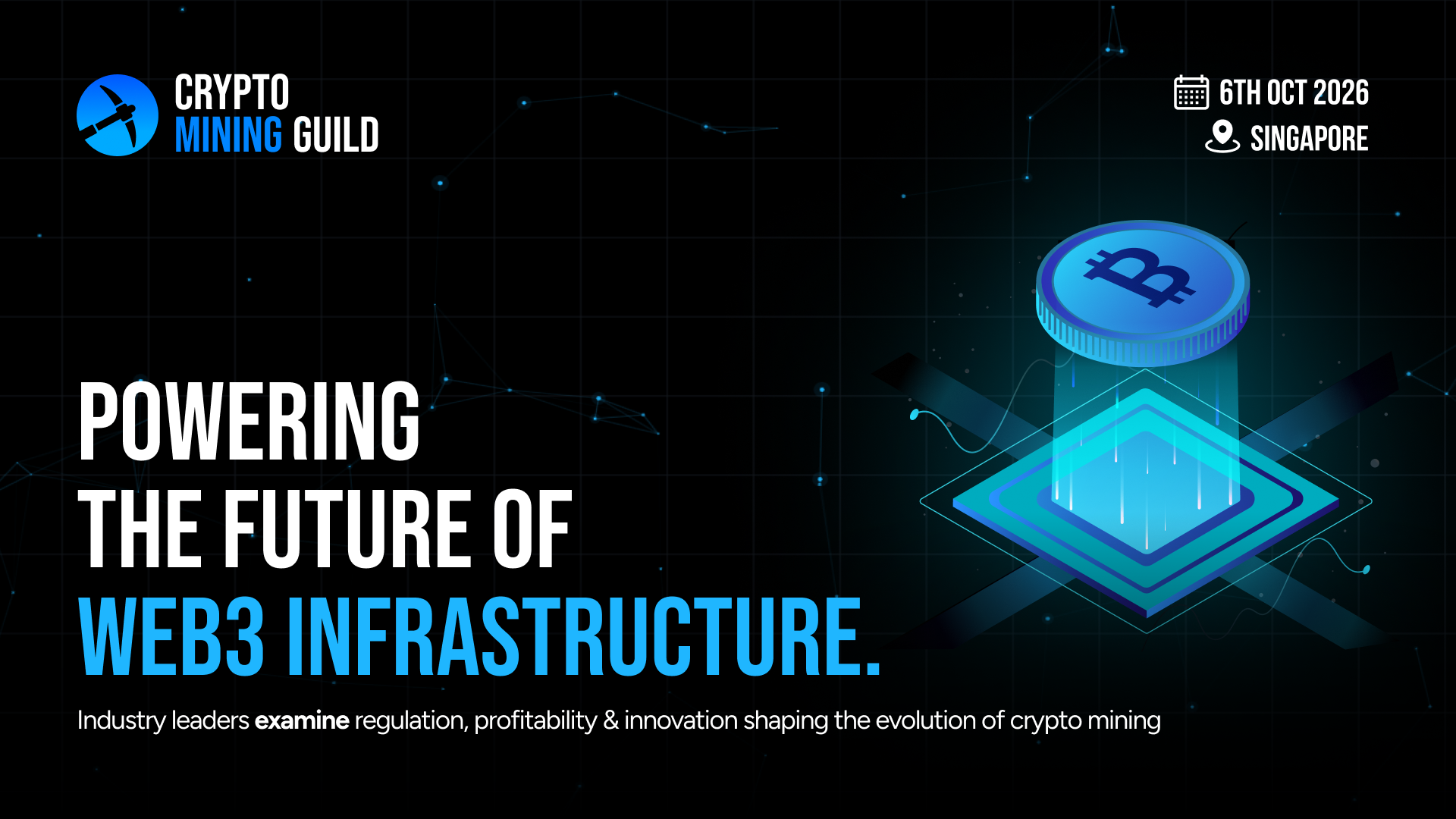
SINGAPORE : The digital asset mining industry is undergoing a structural restructuring phase of its physical infrastructure. Driven by changes in Proof-of-Work (PoW) profitability and rising demand for computational power from artificial intelligence (AI) and High-Performance Compute (HPC) sectors, several operators are reallocating their energy capacities. Against this sector-wide backdrop, the Crypto Mining Guild has announced its upcoming infrastructure summit in Singapore. The event is presented by organizers as a technical forum for industrial operators facing current technological and energy mutations.
The conference program focuses on the operational, logistical, and regulatory aspects of data center management. The sector-specific media outlet CryptoNewsZ is officially partnered with the event to provide coverage of the sessions.
Evolution of computing infrastructure: From Block Mining to HPC
The traditional economic model of cryptocurrency mining relies on optimizing energy efficiency per unit of hashrate (hashing power). The emergence of resource demands for training Large Language Models (LLMs) is now prompting a portion of industry players to leverage their megawatt (MW) capacities for alternate computing applications.
The conversion of mining hardware into infrastructure suitable for artificial intelligence involves specific technical and financial challenges. The Singapore summit will bring together mining farm operators, HPC solution providers, and energy distributors to evaluate transition protocols for existing sites. The thermal and electrical requirements of latest-generation Graphics Processing Units (GPUs) present structural specificities that differ from the ASIC chips utilized in mining.
While facilities designed for the Bitcoin network often feature secured access to heavy grid infrastructure, adapting them for enterprise cloud workloads requires architectural modifications. Summit working groups will address the implementation of power redundancy protocols, the reinforcement of telecommunication network stability, and the deployment of low-latency connectivity required for machine learning workloads.
Thermodynamic management and electrical grid integration
The establishment of high-density data centers within the Asia-Pacific (APAC) region is conditioned by local climatic constraints. In tropical zones, traditional air cooling induces high operational costs and elevates Power Usage Effectiveness (PUE) metrics, complicating compliance with modern efficiency regulatory thresholds.
The summit will present technical data regarding liquid immersion cooling systems. This method involves submerging electronic components in a dielectric, heat-conductive fluid, limiting fan power consumption and increasing available compute density per unit of surface area.
The operational viability of these data centers also depends on electricity procurement conditions. In response to potential public grid restrictions, participants will analyze strategies based on micro-grids and the utilization of surplus energy. Presentations will include the review of load-balancing software solutions designed to modulate data center consumption according to the intermittent production of renewable energy sources.
Regulatory frameworks and ESG criteria in the Asia-Pacific Region
The selection of Singapore for this forum coincides with the application of strict local regulations on energy consumption and the carbon footprint of digital infrastructure. The reinforcement of Environmental, Social, and Governance (ESG) compliance criteria by regional authorities requires facility managers to implement verifiable performance measurements.
Summit sessions will analyze current legislative frameworks, notably data sovereignty laws that mandate the geographical localization of cloud processing and physical storage. This regulatory trend influences the development of distributed infrastructure models.
In this context, the applications of Decentralized Physical Infrastructure Networks (DePIN) will be subject to legal analysis. These models aim to coordinate local computing nodes via decentralized governance structures. The summit will examine the integration conditions of these technologies within the different legal regimes of the APAC zone.
Participant profiles and financial themes
The organizers have restricted attendance to sector professionals: site operators, thermal engineers, infrastructure designers, and hardware manufacturers. Interventions will rely on empirical data and industrial case studies.
Discussions will cover all stages of the value chain, from the procurement of high-performance semiconductors to the commercialization of computing capacity. Expert panels will address the following topics:
- Logistics and supply chain security for silicon components;
- Financing structures adapted for Capital Expenditure (CapEx) intensive projects;
- Contractual models governing the allocation of power capacity and server space for AI enterprises.
The objective of these technical exchanges is to document the operational standards of the industry as the sector evolves toward a diversification of its computing activities.
Market outlook
The data and findings resulting from the Singapore sessions will provide indicators on the medium-term evolution of global digital infrastructure. The capability of operators to manage the transition toward HPC and AI, while controlling the impact on regional power infrastructure, constitutes a primary development factor for the sector in the coming years.