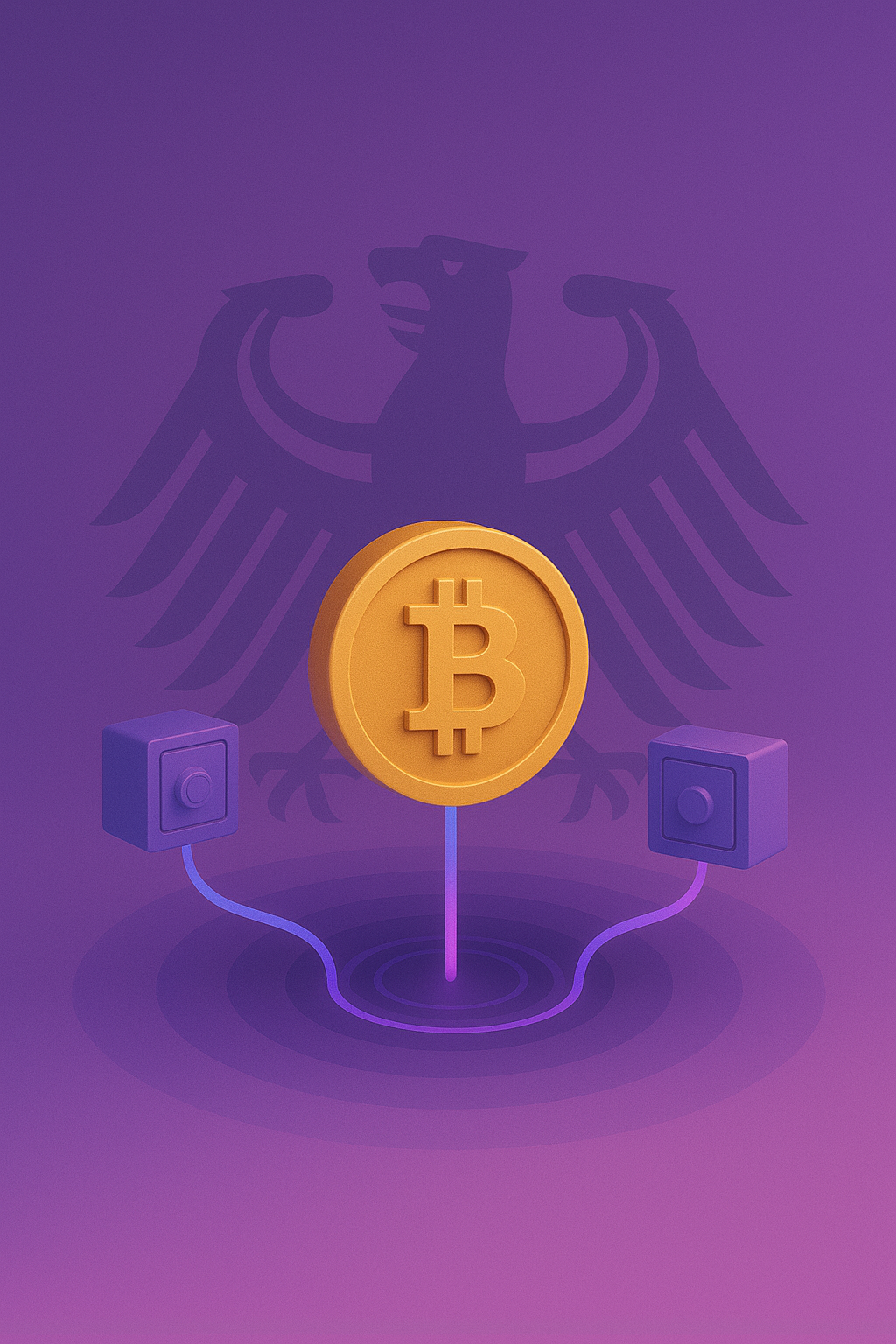
The debate over the recognition of Bitcoin (BTC) has entered a new phase in Germany. The main opposition party, Alternative für Deutschland (AfD), has submitted a motion to the Bundestag calling for Bitcoin to be recognised as a distinct asset — rather than just one cryptocurrency among many — and potentially included in the country’s strategic reserves.
A bold motion
According to the parliamentary text, the AfD believes that the forthcoming European Markets in Crypto-Assets (MiCA) regulation should not apply to Bitcoin in the same way as it does to other crypto-assets. The party argues that Bitcoin’s decentralised structure is unique and that excessive regulation could undermine digital sovereignty, innovation, and financial freedom.
Bitcoin in national reserves?
At the heart of the proposal is the idea of classifying Bitcoin as a strategic reserve asset, alongside gold and foreign currencies. The MPs behind the motion argue that the federal government has yet to recognise Bitcoin’s potential in times of monetary instability, as well as its possible role in energy integration. Adopting this approach would place Germany among the few European countries seriously considering Bitcoin as a tool for economic sovereignty.
Tax and regulatory clarification
The AfD’s motion goes beyond symbolic considerations. It calls for clarification on several key points:
- Maintaining the exemption from capital gains tax on Bitcoin after 12 months of ownership, as is currently the case in Germany
- Preventing the systematic classification of activities such as mining or operating Lightning nodes as commercial, which creates legal uncertainty for individuals and businesses
- Affirming that non-custodial wallet providers and node operators should not be subject to excessive licensing requirements
The European context: from France to Germany
This initiative forms part of a broader trend. A similar proposal has recently been put forward in France, suggesting the creation of a “strategic reserve” of Bitcoin. In Germany, the AfD argues that the issue is as much political as it is economic: Bitcoin could offer an alternative to the centralised financial system and serve as a response to central bank digital currencies (CBDCs).
Challenges and prospects
The debate in Germany highlights several key issues:
- Digital and monetary sovereignty: Incorporating Bitcoin into national reserves could help the state strengthen its position in the face of global monetary dynamics and inflationary pressures.
- Innovation and attractiveness: Overly strict regulation could drive investors and talent away from Germany towards more flexible jurisdictions.
- Technology and energy: Bitcoin is viewed not only as a financial asset, but also as a tool for energy conversion, through mining or the use of surplus electricity.
- Regulatory balance: The challenge lies in maintaining a credible regulatory framework without stifling innovation, particularly for assets with unique characteristics.
Conclusion
By raising the possibility of integrating Bitcoin as a national reserve asset, Germany is at a strategic turning point. What was once seen as a purely speculative asset is now being considered in terms of monetary, energy, and industrial policy. Its recognition will depend on clarifying tax frameworks, distinguishing between asset categories, and demonstrating the political will to adopt a proactive approach. Bitcoin is no longer confined to the crypto-financial sphere — it is entering the realm of national sovereignty.