The European Union is taking a new step in its sanctions strategy against Russia. As part of its 19th package of measures, Brussels is now targeting the digital asset sector, with a particular focus on the Russian stablecoin A7A5 and crypto platforms suspected of facilitating the circumvention of economic sanctions.
A stablecoin in Brussels’ crosshairs
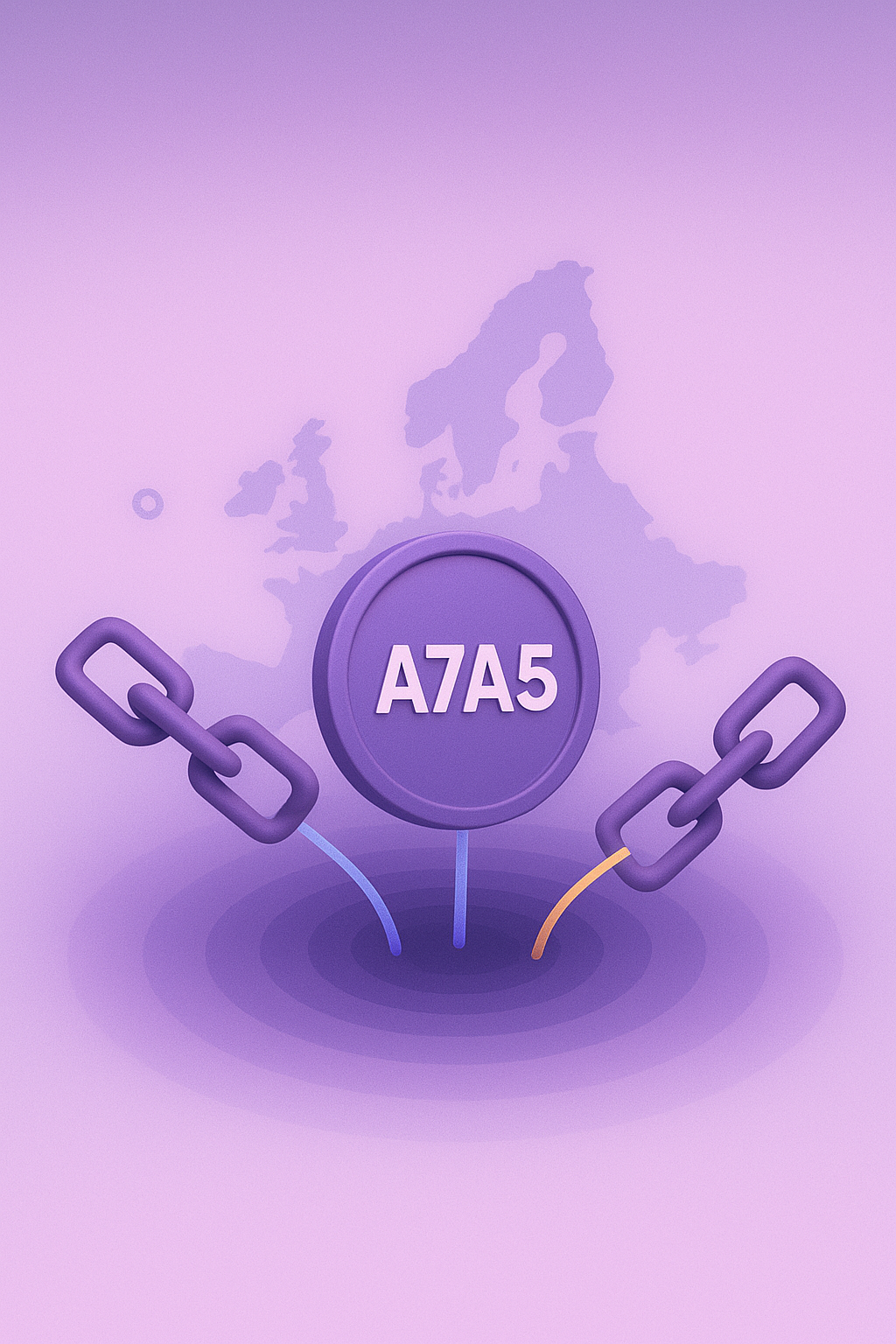
The A7A5 stablecoin, pegged to the Russian ruble, is at the center of the EU’s new concerns. Launched in early 2025, the token has reportedly experienced rapid growth in market capitalization, surpassing $500 million. European authorities believe it could be used as a financing tool for Russian entities affected by current financial restrictions.
In response, the EU is considering a complete ban on transactions involving A7A5. European citizens and businesses would no longer be allowed to trade, purchase, or hold this stablecoin, even indirectly through intermediary platforms.
Crypto platforms under scrutiny
Beyond A7A5, European regulators are also targeting cryptocurrency platforms suspected of helping to bypass sanctions. Until now, EU measures mainly focused on banks, financial institutions, and companies in the energy sector. From now on, Web3 players and crypto exchanges are fully within the scope of economic sanctions.
This decision reflects a growing awareness among European institutions: cryptocurrencies can serve as alternative financing tools in regions subject to restrictions. By targeting these platforms, the EU aims to limit Russia’s economic influence and cut off digital funding channels.
Regulation expands to the crypto sector
The expansion of sanctions demonstrates the European Union’s determination to integrate the digital dimension into its economic and geopolitical policies. Crypto assets are no longer seen solely as investment instruments, but as strategic tools subject to the same rules as traditional financial assets.
For companies in the sector, this shift requires rapid adaptation. Platforms will need to strengthen compliance measures (KYC, transaction traceability) to avoid any interaction with sanctioned entities.
Implications for European users
For individuals, these new measures call for increased caution. Interacting with a targeted stablecoin or platform could now result in sanctions or restricted access. This regulation marks a turning point: transparency and compliance are becoming essential conditions for any crypto activity within the European Union.
Towards a new era of financial control
By targeting the A7A5 stablecoin and crypto exchanges linked to Russia, the European Union confirms its intention to oversee all financial channels, including those based on blockchain technology. This 19th sanctions package reflects a geopolitical reality: the line between traditional finance and decentralized finance is gradually blurring, paving the way for a global regulatory framework in which crypto plays a central role in economic and diplomatic affairs.